
Stop Asking If Diet Foods Are Good or Bad — Ask What Job They’re Doing

Walk into any food discussion online and it won’t take long before someone asks the same tired question:
“Is this food good or bad?”
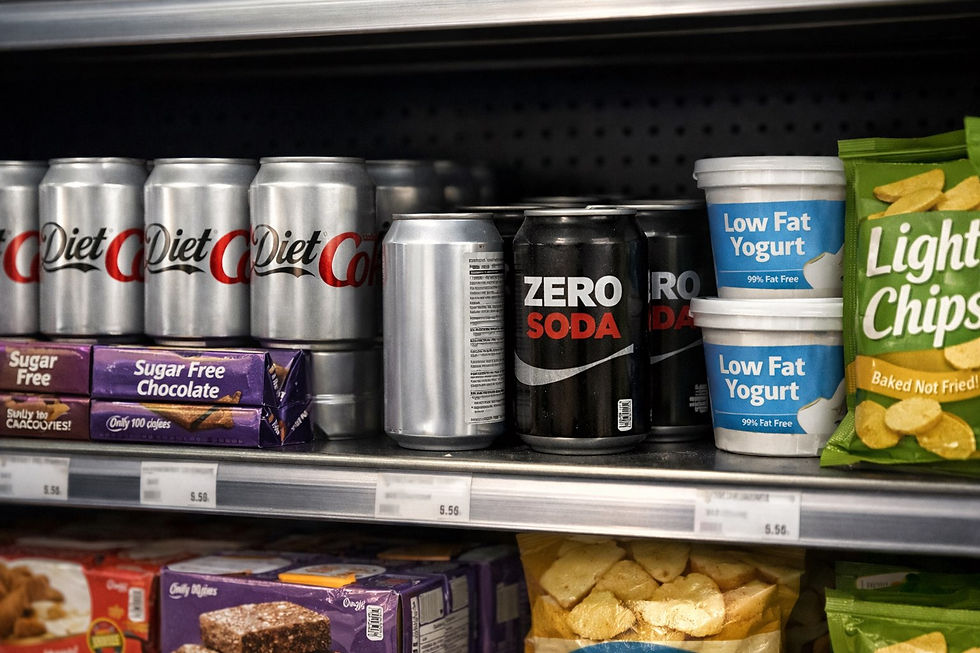
Diet Coke. Protein bars. Low-fat yoghurt. Sugar-free chocolate.The names change, but the argument never does.
One side shouts toxic.
The other shouts science.
Everyone leaves more confused than when they arrived.
Here’s the problem:
“Good or bad” is the wrong question.
Food doesn’t exist in a vacuum. It exists in people’s lives. And until you understand what a food is doing for someone, arguing about whether it’s “healthy” is mostly noise.
Diet Foods Don’t Exist for Nutritional Reasons Alone
Let’s use Diet Coke, because it’s the internet’s favourite battleground.
On paper, it’s simple:
No calories
No sugar
No nutritional value worth mentioning
That’s it. That’s the label.
But labels don’t explain behaviour.
People don’t drink Diet Coke because of a spreadsheet. They drink it because it does a job.
And that job is rarely “weight loss”.
The Hidden Jobs Diet Foods Do
Diet foods are rarely about the food itself. They’re about what the food represents.
Here are some of the most common jobs they end up doing.
1. Control
Diet foods often act as a way to feel in control around eating.
Choosing the “diet” option can feel like:
being responsible
being disciplined
being “good”
Even if the rest of eating feels chaotic, the label provides certainty.
That feeling of control is powerful — and it’s one of the main reasons these products stick around.
2. Permission
For many people, diet foods provide permission to enjoy something without guilt.
A diet drink isn’t just a drink — it’s a pass.A way to have something sweet without breaking invisible rules.
The problem is that when permission comes from packaging instead of internal cues, it never quite satisfies.
3. Diet Rule Compliance
Diet foods are excellent at helping people stay inside diet rules — even diets they claim they’re not following anymore.
“I’m not dieting, I just choose the lighter option.”
“I don’t restrict, I just prefer sugar-free.”
Sometimes that’s true.
Sometimes it’s just diet culture in a new outfit.
4. Appetite Bridging
Used intentionally, diet foods can help bridge gaps.
A diet drink might:
replace a habit of sugary drinks
help someone reduce calories temporarily
make a transition feel manageable
This can be useful — when it’s conscious and short-term.
Problems arise when the bridge becomes the destination.
5. Identity Signalling
Like it or not, food choices signal identity.
Diet foods can quietly say:
“I’m health-conscious”
“I’m disciplined”
“I care about my body”
That’s not vanity — it’s human.But when identity becomes tied to restriction, it’s hard to loosen your grip.
So… Are Diet Foods Bad?
No.
And also… sometimes.
That’s not fence-sitting — it’s reality.
Diet foods aren’t inherently harmful. But they can become harmful when:
they keep you stuck in dieting mode
they replace learning hunger and fullness
they reinforce food moralising
they prevent satisfaction
Ironically, many people consume diet foods for years and still feel out of control around food — because the underlying relationship never changes.
The Real Cost Isn’t Ingredients — It’s Attention
Most debates about diet foods obsess over ingredients:
sweeteners
chemicals
additives
But the bigger cost is often mental bandwidth.
Constantly negotiating:
“Am I allowed this?”
“Is this the better option?”
“Did I choose correctly?”
That mental load is exhausting — and it has nothing to do with nutrition.
A Better Question to Ask
Instead of asking:
“Is this diet food good or bad?”
Try asking:
Do I actually enjoy this?
Does it help me feel satisfied?
Am I choosing it freely — or out of fear?
Is it supporting my life, or shrinking it?
Those answers matter far more than any label.
Diet Foods Aren’t the Enemy — Absolutism Is
The real damage doesn’t come from Diet Coke or low-fat yoghurt.
It comes from:
rigid thinking
moral hierarchies
the idea that there’s one correct way to eat
Some people enjoy diet foods and move on with their lives.
Others use them as a substitute for trust — in their body, appetite, and preferences.
Same product. Very different outcome.
If You Want to Move On From Diet Thinking
Here’s the uncomfortable truth:
You don’t escape diet culture by switching products.You escape it by changing how you relate to food.
That means:
fewer rules
more curiosity
less outsourcing trust to labels
more listening to your own experience
Diet foods may or may not have a place in that process — but they can’t do the work for you.
The Bottom Line
Diet foods aren’t good.
Diet foods aren’t bad.
They’re tools.
And like any tool, they can help — or they can quietly keep you stuck.
The most honest question isn’t whether a food is healthy.
It’s whether it’s helping you live the life you want.
More articles on scrummy.com
Or check out The Scrummy Handbook — for eating that works in real life, not just on labels. 🍽️


Comments